 by Robin Roenker
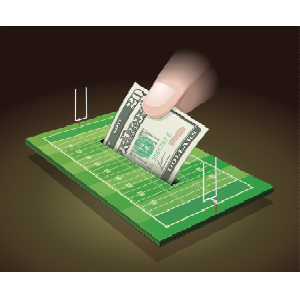
Whether college athletes should be paid to play their sport has been debated for decades. Some say that student athletes provide the labor that generates revenue for their school so why shouldn’t they reap the benefits. Others say scholarships and eventual degrees from top tier schools should be payment enough.
For the first time, beginning with the 2025-2026 academic year, college athletes from Division 1 schools will be eligible to receive direct payments from their universities for participation in their school’s sports teams. Division 1 represents sports programs operating at the most competitive level among the three existing divisions in the National Collegiate Athletic Association (NCAA). The NCAA counts 363 Division 1 schools among its membership.
For decades the NCAA resisted paying athletes beyond permitted scholarships and small stipends to cover other specific costs of university attendance, such as travel to and from school. In taking this stance, the NCAA has held that college athletes’ amateur, or non-paid, status kept college sports distinct from professional leagues.
In recent years, though, athletes have increasingly argued that such a model is inherently unfair and even exploitative since their athletic play generates billions in revenue each year, especially from media coverage rights, for the NCAA and participating universities.
Settling the argument
To challenge the prevailing college sports model, some athletes joined recent class action lawsuits against the NCAA. Those lawsuits include House v. NCAA, Hubbard v. NCAA and Carter v. NCAA. These cases argued that the NCAA violated existing antitrust laws by illegally limiting college athletes’ earning potential.
Antitrust laws are meant to protect consumers from unfair business practices and promote fair competition within the marketplace. In addition, these laws prohibit corporations from fixing wages and offering exclusive contracts in an effort to reduce competition.
In May 2024, the NCAA, along with its largest athletic conferences, the so-called Power Five (the ACC, Big Ten, Big 12, Pac-12, and SEC), agreed to settle the three lawsuits out of court. In July, following months of give-and-take on deal specifics, final settlement details were released. U.S. District Judge Claudia Wilken of the Northern District of California granted preliminary approval of the settlement in October 2024, setting a final hearing for its approval on April 7, 2025.
Once in effect, the landmark settlement will forever change the way college sports are played. Specifically, the NCAA and member schools have agreed to pay $2.78 billion in back damages over the next 10 years to athletes who played in Division 1 schools between 2016 and today. In exchange, plaintiffs in the three cases agree to drop their complaints, and athletes that participate in the settlement are prohibited from suing the NCAA for other potential antitrust violations. Eligible athletes have until January 31, 2025 to raise objections or opt out of the deal.
As part of the settlement, participating Division 1 schools will now also be able to pay existing and future players from an annual pool of roughly $20 million per school per year. This total represents 22% of the revenue the average Power Five school makes each year from media rights, ticket sales, and sponsorships.
“NCAA college athletes have waited decades for this moment, and their right to receive the full value of their hard work has finally arrived,” Steve Berman, an attorney representing plaintiffs in the anti-trust cases against the NCAA, said in a statement following the settlement announcement.
A long time coming
Proponents of the NCAA settlement feel that it will finally enable college athletes to earn due compensation for their sports participation. According to a 2016 NCAA survey, college athletes in general devote 32 hours per week to their sport. On top of that, these athletes must keep up with schoolwork or risk being taken off the team.
Under the settlement, athletes will still be able to earn money for the use of their name, image and likeness (NIL) in addition to being paid directly by their school. A 2014 case, O’Bannon v. NCAA, was one of the first to successfully use an antitrust legal argument to question NCAA compensation practices regarding NILs. In that lawsuit, former UCLA basketball player Ed O’Bannon challenged the NCAA’s use of NILs for former student-athletes, including the creation of video game player profiles extremely similar to real players—without their permission or compensation—in games like EA Sports’ NCAA Basketball 09.
During legal proceedings for the O’Bannon v. NCAA case, the NCAA argued that paying athletes contradicted the essential role of amateurism in college sports. But in her ruling, Judge Wilken, the same judge involved in the recent NCAA settlement, sided with O’Bannon, dismissing the amateurism argument and ruling that the NCAA’s caps on student earnings were overly restrictive.
“The Court finds that the challenged NCAA rules unreasonably restrain trade in the market for certain educational and athletic opportunities offered by NCAA Division 1 schools,” Judge Wilken wrote in her opinion.
The NCAA appealed the ruling to the Ninth Circuit Court of Appeals, which upheld the lower court’s decision in part. The NCAA then appealed that decision to the U.S. Supreme Court, but they declined to hear the case.
The U.S. Supreme Court did weigh in on the subject of NILs with its 2021 decision in NCAA v. Alston. In a unanimous opinion, the Court granted NIL rights to student athletes, finding the NCAA’s previous restrictions on athlete compensation violated antitrust laws.
Challenges remain
The $2.78 billion in settlement money will be distributed to more than 10,000 former and current athletes. How much money an athlete will receive will be determined by a series of formulas that measures the athlete’s likely “market value” based on such things as the marketability of the sport they play, the athlete’s performance in that sport, and the athlete’s social media fame, among other factors.
Critics of the distribution plan point out that the approach favors athletes in high-profile sports, such as football and men’s basketball, over athletes in sports that bring in less money, like lacrosse or fencing. It is estimated that 90% of the settlement money will go to players from football and men’s basketball programs. Proponents of the deal believe this distribution approach is justified since high-profile sports drive higher revenues for schools.
Additionally, future court cases may try to challenge the legality of distribution plans that will, as a whole, tend to pay higher sums to male athletes than female athletes. These challenges could argue that such payment inequality is illegal under Title IX, a federal law prohibiting discrimination in education and school sports based on gender.
“A lot of people anticipate that there will be Title IX challenges, which will attempt to make the legal argument that unequal NCAA settlement distribution is profoundly impacting the equality of the opportunity for men’s and women’s sports,” says Andrew Bondarowicz, an adjunct professor who teaches sports law at Rutgers Law School in Newark.
There’s also the problem of how schools will cover the cost of the athletic payments. To cover both back damages and the required $20 million in new annual payment allocations, universities will likely need to divert funds from other areas, including funds that may have been earmarked for athletic facility improvements or to fund smaller sports without high ticket sales.
“If you look at a school like Rutgers, athletics at Rutgers has never been revenue positive, so it’s always required a subsidy from the school to operate,” says Bondarowicz, who practices sports and entertainment law in Berkeley Heights, and represents professional athletes and coaches. “So now, since you have to make these payments, it’s just going to require an even greater subsidy.”
In the long run, some schools may face the difficult decision of dropping certain non-revenue sports altogether or even making cuts to certain academic programs to be able to pay for athletes in their more high-visibility sports.
“When schools have to start shifting funds to compensate players in other areas, they’re going to have to cut sports,” Bondarowicz explains. “So, swimming, ironically, will be one of those that’ll probably see a lot of cuts, even though Grant House [the named plaintiff in the House v. NCAA case] was a swimmer at Arizona State.”
Upcoming legal or legislative decisions will also need to settle whether the new NCAA model means that athletes are now essentially employees of their universities since they’re being paid by their schools for a service. This distinction matters because if athletes are now seen as employees, current laws could require schools to meet federal hourly wage standards and provide health insurance, worker’s compensation for injuries, and other benefits—all of which would add to the underlying cost of running a sports program.
Based on recent legal precedents, Bondarowicz thinks the NCAA’s cap on five years of athletic eligibility for students may eventually drop away entirely, further blurring the lines between college and professional sports.
“College is much more forgiving because, in football for example, there are 150 schools, each with 100 people on their team, as opposed to 32 NFL teams with 53 people on a roster,” he explains. “There’s much more opportunity in college. So, as eligibility restrictions are dropped, I think we may see a new generation of players literally make their career, not as a professional athlete, but as a college athlete.”
Discussion Questions
- What do you think of the debate about paying college athletes versus the argument that receiving a college scholarship/degree should be payment enough? Pick one side and make your best argument.
- What do you think of the distribution plan for the NCAA settlement? Should it be divided evenly among eligible college athletes or favor those whose sports bring in more money? Explain your answer.
- What do you think of the Title IX implications of the NCAA settlement? Should male athletes be paid more to play their sports than female athletes?
Glossary Words
appealed— when a decision from a lower court is reviewed by a higher court.
precedent—a legal case that will serve as a model for any future case dealing with the same issues.
subsidy—a sum of money granted to offset costs.
upheld — supported; agree with the earlier decision of a lower court.
This article originally appeared in the winter 2025 issue of The Legal Eagle.